Sunday, August 29, 2010

Sweet Cooking Memories

Sometimes it’s really soothing to think back to a “simpler” time, retreating from the concerns of the present. Of course, a study of history will confirm that there have never truly been simpler times, just different times. It is, apparently, human nature to recall the pleasant memories of times gone by and skip over the negatives that were surely there, but don’t make for good memories.

When I think back, my tendency is also to remember the good things, the happy times. In Southern families like the one of my childhood, happy times often coincided with food. For my parents’ generation, one that had been hungry during the Depression and known rationing during World War II, food was love. My mother and her parenting peers didn’t worry about childhood obesity as we do today, but found ways not just to feed their children, but to feed us abundantly and introduce us to all the flavors their culinary skills might devise.

Recently I wrote about “Depression food,” the dishes my mother used to stretch the meat in our diet further with starches and vegetables. She was quite creative and successful in this endeavor. We loved her vegetable beef soup, not because it was full of beef, but because the minimal amount of meat was augmented with vegetables. In summer months, these were put into the pot fresh from the garden. In the winter, they came from canned produce, some of it put up by relatives.

Mama’s real love in cooking, I believe, was sweets, desserts of all sorts. She had a special love of baking cookies, making several different kinds every Christmas to give to family and friends who might come to visit. One of my longtime friends, Sara, having read some of Mama’s recipes that I posted recently, remembered Mama’s “Stone Jar” cookies. Honestly, I hadn’t thought of those in years due to my ongoing preoccupation with foods that don’t add sugar and other fattening ingredients to my diet.

Sara, however, remembered the Christmas experience with these particular favorites from Mama’s kitchen and suggested that I provide the recipe for them. I rummaged around and found the recipe and have provided it below.

Mama’s Stone Jar Cookies

Ingredients:
1 cup Crisco
1 tsp Salt
1 tsp Vanilla
1 tsp Nutmeg
2 cups Brown sugar, packed firmly
3 cups Flour, sifted
2 Eggs
1 tsp Soda
¼ cup Milk
½ cup Pecans, chopped

Directions:
Preheat oven to 350 degrees.
Combine Crisco, salt, vanilla and nutmeg.
Add sugar gradually, making sure to cream thoroughly. Add eggs to mixture. Mix half of flour sifted with soda and mix in. Add remaining flour, milk and chopped pecans. Let the batter stand for about ten minutes (can be covered and refrigerated overnight). Drop from teaspoon onto greased baking sheet and flatten with the bottom of a water glass. Bake for about ten minutes.

Makes about six dozen cookies

In reading this recipe, you might notice the word “about” used a couple of times. That word indicates something about Mama’s cooking (and my own, I admit). She might include specific amounts of ingredients in her written recipes, but she understood cooking to be more art than science. Thus, depending on the weather and the oven and a myriad of other factors that might influence the outcome, these cookies might take ten minutes to bake or maybe twelve. When she was baking, she was in the kitchen from beginning to end of a project. There were no time-outs. In fact, I remember more than once being told to “watch the cookies” if she needed to “excuse herself to attend to personal matters.” If she had an oven full of cookies, more than one family member might be pressed into service to help get cookies off the pans or put them on the racks to cool. At Christmas, the sheer volume of what she produced often demanded this assistance.

Remembering Mama in the kitchen brings back several mental pictures that make me smile. One of them is, of course, the obligatory tasting opportunities that arose. When the cookies emerged from the oven, if any of us kids (or Daddy) were around, we were conscripted to taste the first batch to make sure they were turning out right. Typically the smell of cookies baking drew us like vultures and she rarely had to call out for tasters.

But tasting the baked cookies wasn’t the only gustatory option. If we hadn’t done anything within a couple of hours that she felt deserved either punishment or her disappointment, we were allowed to “lick the bowl and spoon” of any leftover smidgens of batter when all the last of the cookies had been put in the oven. She was economical, so left little batter to be had, but we loved this special treat and were willing to pay the price for it. He or she who “licked” also washed the bowl and spoon and anything else she needed washed.

I have a very fond memory of my mother and aunt in the kitchen together, cooking. Like Beaver Cleaver’s mother, my mother and aunt would go right into the kitchen in the dresses they were wearing rather than change clothes. They would tie an apron around their waists and get to work. What they also did for comfort in a hot kitchen was roll down their hose around their ankles.

In the 50’s women wore hose and would not be bare-legged when wearing dresses. There were no panty hose then, so they would simply unhook the hose from their girdles or garter belts and roll them down into funny-looking concentric tubes just above the ankle. There was a time in my life when I found this somehow embarrassing and unseemly, perhaps when I was in puberty and most of my mother’s life was an embarrassment. Now, however, I remember that practice and can’t help but smile with affection.

Their generation had endured much. Thus, they were thankful for the bounties of post-war America, happy to have children in the house (with no sense that a birth control pill would change everything for the next generation) and managed to share their homes with their parents or their husbands’ parents as that older generation aged and needed to shelter in their children’s homes. My father’s father lived with us for as much as a decade in the last years of his life. My aunt hosted first her own mother and grandmother, then my uncle’s parents in their last years.

As I said at the beginning of this, they weren’t really simpler times, just different times. Those times had their problems and burdens as we have our own today. But there were so many good times and there are so many good memories, many as sweet as Stone Jar cookies. I’m grateful for those memories and hope our generation is providing some good memories for our children and theirs in the years to come.

Thursday, August 26, 2010

Celebrating Friendship

Photo by Mike Lumpkin

I just came across a favorite quote on the front of a note card: “A friend is someone who knows all about you, and still likes you.” It seems particularly appropriate to me as I have reveled this week in the joys of friendship.


For two wonderful days, Mike and I shared our home with friends of long standing. We shared meals, a drive through the North Carolina mountains, an afternoon boating on the lake and a funny movie. Best of all, we talked about things that really matter to us and we laughed together about the follies of life, including our own foibles.

I shared a well-written newspaper column with friends and got thoughtful responses, including one asking for more information about our son’s impending wedding. Tell me more, she said, and I loved her anew for caring about those I hold closest and most dear.

Later in the day she shared news of another friend and I reconnected with someone else who has known me for decades and still thinks I’m worth knowing and loving. Just thinking of her makes me smile and even as she encouraged my blogging with her kind words, I remembered working on the high school newspaper where my love of writing was encouraged and I recalled so many fun times we all had then.

And so it goes. We find each other at various points in our lives and friendships are forged. Over the years these relationships wax and wane, perhaps, as we follow different paths. We scatter across the country, even across the globe for job opportunities or family changes. But when we come back together, there is still that initial connection that draws us together.

Sometimes our connection is only the memory of when we knew each other first or when we spent time together in the neighborhood, at school or a workplace. If we’re lucky, and I have certainly had more than my share of luck, the connection is re-ignited in reunion and we either pick up where we left off or even refresh the bond and it grows stronger.

In less mature years, I thought of friendship as the bond between people with common interests, similar opinions and probably similar backgrounds. Those common experiences laid the groundwork for two people to create the foundation of a relationship. I’ve learned over time that many of my most treasured friendships are with people whose experiences have been quite different from mine and those differences are sometimes the spice that makes the relationship meaningful.

I now have friends whose social, political and religious views are very different from mine. Sometimes these are differences we can discuss without rancor, sometimes not. When the differences are too painful for conversation, we simply opt to leave those topics out of our conversations. We seek and find common ground that allows us to continue to love and support one another, aside from those areas in which our disagreement would pull us apart. I have learned that it’s possible to disagree vehemently with friends, yet keep my disagreement to myself. I have come to understand that there is room in my life for many points of view and the fact that someone doesn’t see eye to eye with me is not a reason to avoid them, as long as we are mutually respectful of each other’s right to differ.

In fact, I find myself wishing that our public discourse could focus less on our differences and more on looking around us to find ways in which we can care for each other and for our country, rather than how to “best” one another. I am confident in my beliefs and feel no threat from those who don’t see the world the same way. I believe, in fact, that despite our differences, we can achieve important goals if we are willing to value one another more than we need to influence one another toward our own point of view.

Friends are a critically important part of my life. They are, many of them, an extended family that enriches my experience of the world in so many ways. They encourage me, they challenge me and I hope I do the same for them.

It has become a habit for my husband and me to walk early each morning on the shores of our beloved lake. One of the joys of those walks is watching the wildfowl that make their lives there and begin our days with their activities.

The geese are particularly interesting, honking and stirring as they move out of the coves where they have spent the night and into the grass or onto the lake. They honk and flutter, sometimes stirring suddenly off the water and taking flight noisily, for no apparent reason. Out of a group of domestic geese that once lived here, only one remains. It swims and waddles with the others, then is left alone when they fly away since it doesn’t fly. Wherever the flight has gone during the day, the geese are regrouped again the next morning with the single white one sailing close by its Canada goose companions.

In the spring they show off their babies, teaching them how to forage and how to swim. The geese have a lesson then for all of us. The entire gaggle watches over the young geese with the adults surrounding them on land and water, wary of us and any other potential danger that might come their way. The white goose is a part of this protective nursery, willing to challenge us if we seem too close with a hiss as fierce as any. Clearly, she is not the mother, but she cares for the young ones and is loyal to her “friends.”

In her way, she understands, as I do, the value of community, the grace of friends. I begin and end each day grateful, so thankful for the love and comfort of friends. Each day, too, I give thought to how I might be a better friend to those who are such good friends to me.

Thomas Jefferson, a man of great intellect, said it well: "I find friendship to be like wine, raw when new, ripened with age, the true old man's milk and restorative cordial."

Wednesday, August 4, 2010

Mama's "Depression" Cooking

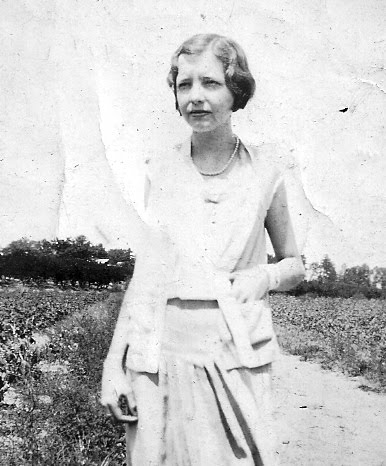
Mama, so young
So I wrote about Mama and said she was a good cook in the 50’s, a woman who could stretch a small budget to feed six people and have leftovers. I also said that someone told me once that some of her recipes might be called “Depression” food because they were probably created during the Great Depression when people couldn’t afford much meat and found ways to augment it with rice and other starches, and vegetables they could grow in their backyards.

I decided to publish a couple of Mama’s “stretcher” recipes here not because we’ve returned to the Great Depression, but because they are actually pretty darn good recipes. If you try them, let me know what you think.

RICE DINNER
Ingredients:
1 pound ground beef or turkey
½ cup chopped green pepper
½ cup chopped celery
½ cup chopped onion
3 tbsp cooking oil
salt and pepper to taste
2 cans whole tomatoes (15 oz. cans)
1 cup rice, uncooked
Directions:
In a large saucepan or skillet, sauté onion, celery and pepper in small amount of oil. Add beef or turkey and brown. Reduce heat. Mix well and spread as bottom layer in pan. Coarsely chop tomatoes and spread (with juice) on top of beef or turkey. Evenly sprinkle rice on top and cover tightly. Cook on low heat for about 1 hour or until rice is done. (Add water if necessary.)

This one sounds simple, eh? It is. It does, however, require some watching. Mama often spent the entire time it was cooking in the kitchen not far from the stove, sometimes making biscuits to go with the meal or chopping up fresh fruit to be served with a little sugar on top as needed. If we had fresh strawberries, some of the biscuits might include some sugar and we’d eat them with strawberries on top for dessert.

We might also have green beans or peas from Daddy’s garden to go with this dish. I don’t recall many green salads being served at our table. Daddy didn’t grow lettuce and we weren’t finding it in stores as readily as we do today. Nobody back then would have imagined we’d be getting lettuce already cut up in plastic bags!

Daddy & Mama
One more staple from Mama’s recipe box was Country Fried Steak. This was a favorite of my father's and was usually served with mashed potatoes.  Don’t be misled by the use of the word “steak” here, by the way because the whole point of this dish was that it was based on cubed steak, a cut of beef that is still available, but was more popular in middle-class homes back then because it was the cheap way to eat beef. Cubed steak, for those who haven’t had it, is meat that requires beating before cooking to tenderize it. Mama did this with either a wooden mallet or the top of a Coca-Cola bottle, the old kind that was made of glass and in our house had multiple uses after the Coke was out of it. Despite this less than glamorous introduction, I will tell you that this is one of my favorite dishes (when I’m not dieting) and one that my son requests from my kitchen.

COUNTRY FRIED STEAK
Ingredients:
1-2 pounds cubed steak, tenderized (Beat it within an inch of its life, folks)
½ cup flour
1 dash salt
1 dash pepper
1 stick butter or margarine
1 cup milk
Directions:
Mix seasonings with flour and dredge both sides of beaten steak. In electric (or large) skillet, heat butter. Brown both sides of steak in butter; cook until done. Remove steak to platter and hold in warm oven while making the gravy. Using the same skillet, add more flour and butter (if needed) and brown slightly. Then add milk and cook, incorporating browned beef bits (we called “scrumples”) and stirring frequently, on low heat until gravy is at desired consistency. Serve gravy hot over steak, cooked rice and/or biscuits.
Note: The Armstrongs are partial to gravy with “body” rather than the classically smooth or thinner gravy.

Now, as with all my cooking, I’m prone to experiment and add my own touches. So these days I’m partial to coarse ground black pepper and garlic powder in recipes like these. I encourage anyone who cooks to try things. The only right way is the way that you or those you are serving enjoy the food.

Mama hasn’t always approved of my innovations, by the way. She grew up with the notion that the way to cook green beans was all day in a pot with fatback. In an attempt to live a somewhat healthier life, I steam green beans. The first time I served them, slightly crisp, but I thought really tasty, she was appalled. “What have you done to these green beans,” she asked with horror. When I told her I steamed them, she huffed and said she was surprised to find that I’d taken up Yankee cooking methods.

There’s no question that her green beans, steeped in fatback and juices all day, did have a wonderful taste. They tasted, of course, the same way that anything cooked that way would taste—like the fatback with which they were cooked. I couldn’t convince her that the naturally sweet taste of the beans themselves, steamed briefly, could compare. Actually, I assured her, I like both, but since I don’t work all day in the fields, I can’t afford to eat the way people used to eat. I also don’t work the same way Mama did then, on her feet much of day, ironing, cooking and sewing and sometimes going to work in an office, as well.

Mama's kids
For those who look over their shoulders for “the good old days,” I say “not me.” I had a wonderful childhood, thanks to Mama and Daddy, and I’m grateful for that. I’m also happy that our world has changed in the way the world always changes. Some things change for the worse, some for the better. I wouldn’t trade the time period I’ve known for any other. I don’t think Mama would have, either.

The picture above was taken some time in the 50's.  That's me on the left (with the strange hairstyle), my brother Buddy and my sister, then known as Patsy.  The dog's name was Inky.  I think she liked Mama's cooking, too, because she and her companion dog, Bingo, were always underfoot in the kitchen, hoping for a scrap or two, usually competing for those with one of our cats.   

Monday, August 2, 2010

Remembering Mama


It’s Mama’s birthday today and memories of her flood my thoughts. She died in 2001, just a few weeks before the 9/11 attacks on the World Trade Center. I’ve always been grateful that she was gone before that happened. She didn’t need to experience that.

What she did experience in her life was somewhat extraordinary for a woman of her time. As an independent person in her twenties, she left her family in Atlanta and moved to Albany, Georgia, to live and work there. Acceding to her parents’ wishes, she lived at first in a boarding house run by a family friend.

She moved into an apartment building later and that’s where she met my father. They fell in love, rather tempestuously, I believe, and married. Little was ever said directly about their courtship and early marriage, but there were hints throughout their life together that they found equal footing in both intellect and temperament. Nobody could back either of them down once they had set their course.

My memories of Mama during my childhood center on her ability to feed and clothe three growing children and also make a home for Daddy’s father, all on a limited budget. She was a great cook, finding ways to stretch dollars and turn the simplest ingredients into meals that were not only filling, but always tasty. Interestingly, when I prepared one of her dishes later in life for a boyfriend, he referred to it as “Depression” food. That’s what his mother called dishes that were stretched with rice or potatoes, a tactic that was widely used in the Great Depression. (I’ll post some of her recipes later this week.)

I still have a fondness for seersucker because Mama made so many of our summer clothes from that particular fabric. It was inexpensive, felt cooler than other materials in summer and was, perhaps, the first “wrinkle-free” fabric. All of us, including Daddy, had summer shirts of seersucker in every available pattern. We kids also had shorts and pajamas. She ran that old Singer sewing machine night and day to produce our clothes. Then she put them away carefully at summer’s end so that those items that survived active children could be passed down from oldest to youngest the next year.

Even as a child, I was aware that Mama had a good mind. She read voraciously, as did Daddy, and our home was filled with books and magazines. I’ve always believed that I learned to read before I went to school because everyone else in our house always had their noses in books. I could either be left out or learn to read, so read I did.

In addition to taking care of all of us, Mama found time to include a small menagerie of pets in our household, including cats that had kittens and dogs that produced puppies regularly. She helped with whatever scouting program we were in, too. She sometimes belonged to a garden club, knew the neighbors and could be counted on to provide a dish for new mothers or those with a death in the family. Food was the social currency in our middle-class existence and Mama deftly provided food wherever it was deemed necessary, from church suppers to birthday parties.

She was always busy, always doing something with her hands, preferably using her active mind in the process. Back then, much of our clothing had to be ironed. She would wash the clothes and hang them on the line to dry. Then she would iron those things that needed it, having sprinkled them with water from a Coke bottle with holes in the top. Sometimes this would be the time she talked on the phone with friends. I can still see her ironing away with the phone cradled between chin and shoulder, mostly listening if it was a talkative friend, but often debating one subject or another with someone who challenged her.

She had been a working woman before we kids came along and she returned to work at some point after I, her youngest, went off to school. At that point, my sister Pat, six years older than me and two years older than our brother, became our after-school baby-sitter. Sometimes, depending on Daddy’s work schedule, he might work nights and be at home and awake in the afternoons, so he took the lead on those days.

When Mama went back to work, she took a clerical job with Social Security. As years went by, she was promoted until her final job involved assessing and processing the claims of people who applied for benefits. She alternately came home frustrated and discouraged by their plight or energized and engaged by their personal stories. There were the great Southern names she encountered, like Stillwaters Logan or Jesuslovesme Reynolds. There were the touching stories of births recorded in family Bibles that were lost for years, then found to reveal that someone who thought he or she was 55 was actually 65.

Mama also brought home some office jokes that made Daddy laugh out loud when they were behind closed doors. Only later did I find out how salacious my Mama’s sense of humor could be. Daddy, she told us when we were grownups, would never have condoned those jokes in front of anyone else, but they shared them privately and she made him laugh a lot.

That bawdy sense of humor points to one of the many paradoxes about her. In contradiction to the baseness of the jokes, she was often quite ladylike and encouraged that behavior in my sister and me. She despaired that I was such a tomboy, having protected my long golden ringlets for years, only to finally cut them off and perm my hair rather than endure my complaints about the brushing long hair required. She gave up after entering me in the “Miss Sunbeam” contest to find the girl who looked most like the photo on the Sunbeam bread wrapper. I fought her all the way on that one, wanting neither to have my hair put up on my head nor to put on a dress and patent leather shoes instead of my usual tee shirt, jeans and sneakers.

Another way in which Mama defied being easy to describe or to understand was the way her temper appeared without warning. She could exhibit the patience of Job when anyone else would snapped long before. But she could erupt like Mt. St. Helens, too, her anger blasting forth with a heat that could singe the doorknob of Hell. Her fury was unpredictable, most often generated by something the rest of us had neither noticed nor could name.

She was a hypochondriac, prone to illness when any of us became ill. As I remember it, she didn’t miss work that much, but seemed to have a great many aches and pains, as well as ills without specific symptoms, with frequency. On the other hand, always one with a complex personality, she endured more than one hospital stay for serious and identified illnesses without complaint.

Quick to learn, she loved card games at one point in her life, becoming something of a whiz at Canasta. As long as I knew her she did crossword puzzles, including the ones I still find unfathomable, the ones that come with a blank grid so that the puzzler must create her own grid and figure out where the words go. None of them elicited more than an occasional “well, phooey” from her.

In her last years, a victim of senility and diagnosed with an “Alzheimer’s-like condition,” she once again defied the norms until the bitter end. She was alternately confused and delusional, then bright as a penny, remembering verse after verse of a song sung in her childhood. She was dependent one minute, completely on her own the next. She declared herself ready to “go,” saying that she had had a good life, made peace with her Lord and was not afraid. Only in the final months did she lose her faculties. Even then, when she was no longer articulate, the light was still in her eyes, dimmed only in the last days.

As I think about Mama today, I remember so much to admire, so much that I appreciate. I remain perplexed about the contradictions, confused by the quirks of personality. I realize each day the influence she was in my life and am reminded of a line from a song about how we know each other. The song, a love song, of course, says “you know who I am, who I’m not and who I want to be.” I can’t say that I think she knew me this way and I know I didn’t know her so completely, but I know that I wouldn’t have traded her for any other mother. And I know that, no matter how I’ve fought the notion throughout my life, seeking to be just my own self, there’s a lot of Mama in me.

So on this day that would have been her 95th birthday, I wish she were here to hug and be sung to, here to be appreciated for what she brought into her life and mine. I miss that burning spirit of fire, that intelligence and humor. On this day, I’m grateful for Mama and hope not so much that her spirit is at rest, but rather that it is lighting up whatever space it occupies.

Happy Birthday, Mama, and thanks for the memories.

Wednesday, July 14, 2010

Memories of Alaska

(July 14) – Happy to hear that our fellow travelers have reached their individual destinations safely, we have begun a day of adjusting to a time zone four hours earlier than Alaska’s. It’s been pretty much an all-day laundry experience, emptying our suitcases and getting two weeks of clothing cleaned.
Somehow it is now home that seems strange with no seagull’s cries, no steep mountainsides filled with fir trees and snow-covered peaks and no salty tang of the ocean wafting on the breeze. It’s good to be in familiar surroundings, of course, but oddly quiet without the ongoing conversation and laughter among friends.
As we try to isolate a place or an experience from our time in Alaska as the favorite, we find it’s impossible to select just one. Every day was filled with new sights, new sensations and a new appreciation of a part of this world that we had not known. Alaska is a place that can’t be fully acknowledged unless you’re there. In all the years we had read about it or seen the pictures, even the videos that purport to capture Alaska, none of that could capture the entirety of the “great land.”
On the plane from Anchorage to Minneapolis, I was lucky enough to sit next to a young woman who had lived several years in Alaska before returning to the Lower 48 for her job. She had been on a short visit back to Alaska to shepherd her daughters there for a week-long visit. She was on her way back to Nebraska to work, but longs to find her way back to Alaska permanently.
She spoke of her weekend hike in the park around Exit Glacier. She and her hiking buddy each spotted a bear, but didn’t immediately realize that they were each seeing a different bear. When they understood that there were two bears, they spotted a third. Because they are experienced in the outdoors, they made noise and left the area without an encounter that was close enough to endanger them further.
She talked of a 75-mile hike across Alaska that she and a friend had made years ago. Her eyes shone as she recounted their trek. Her enthusiasm for the grandeur and majesty of Alaska is like that of so many people we met. Even those who don’t want to live there year-round, those who don’t like the cold and dark of winters there, even those folks come back in May and stay through September. Then, of course, there are those whose hearts are so taken with Alaska’s magic that they do stay there all year and find special pleasures snowshoeing in winter or skiing under the lights at Mt. Alyeska or just snuggling up in their homes with a good book. We found libraries and interesting bookstores all over the place in our travels.
Or maybe they use the quiet times to express their love of Alaska in art. For every kitschy item we saw, many made in China or elsewhere that tourist souvenirs are manufactured, we saw as many pieces of Alaska-made art. There were beautiful paintings in every style imaginable, glorious sculptures in every medium, including whalebone. Alaskans love music, too, and every town had posters for local musicians. There were, naturally, thousands upon thousands of photographs of the scenery, the wildlife and the people. Some of their art speaks of the culture of the Native People, some of the state’s Russian influences. All of it shouts and salutes and sings the assets of the state and the seas that surround it.
I think about the morning walks that Mike and I took on the upper deck of the ship early each morning. As we went round and round the boat, mostly in mist, but sometimes in a steady rain, we marveled at the landscape around us. The Inside Passage isn’t just a marine highway to the next town; it is a thrill ride among the islands of Alaska’s panhandle where Sitka spruce and hemlock trees compete for attention with eagles nesting among the trees or soaring overhead.
The towns themselves arise out of the forest with color and humor, poking fun at themselves with silly signs or names painted on the rock faces near the docks. The buildings are painted in bright colors, showing off their survival in this remote place where even the state capital, Juneau, can’t be reached by road, but must be approached by boat or plane.
We loved seeing the float planes taking off and landing along the waterways wherever we went, from Ketchikan to Homer to Anchorage. They are symbols of the interdependence between land and sea in Alaska and the spirit of the people here to adapt to their environment and thrive in it.
I will carry with me memories of the wildlife that we saw wherever we went. First there were the eagles we saw from the ship. We were thrilled at our first stop in Ketchican to spot a pair of eagles on a nest just across the way from our balcony. We watched them from our room, then from the walking track, flying around from tree to tree, but never getting too far from their nest. We never saw any chicks, but they were protecting the nest from any and all other birds that came too close.
We laughed at the comical and totally cute sea otters, floating on their backs or diving and spinning in the water. We smiled at the sea lions and harbor seals when we saw them lazing in their blubbery piles on the rocks at bay’s edge. We fell in love with Woody, the steller sea lion at the Alaska Sea Life Center in Seward as he seemed to play with us, diving down along the window where we watched and almost posing for our cameras. One of the keepers said that he likes people. I think she was right. We were awed by the whales—the humpbacks with their signature flukes high in the air, each one with its unique pattern, and the gray whale, surfacing so near our boat that we could almost count the barnacles on its back.
I was talking with a young woman this morning who has not yet been to Alaska, but wants to go. She said her aunt and uncle have been going there for years, returning each year to soak up its beauty and refresh their souls. I understood immediately how they must feel.
All my reflections of Alaska, like the reflections of mountainsides in still waters that took our breath away with their beauty, are filled with depths of emotions that will come back to me like daytime dreams. If Alaska were a dream, it would be the best I’ve ever had. I’m eternally grateful that it is not just a dream, but a reality that will allow me to explore it again and again.

Monday, July 12, 2010

Through the Mountains and Along the Coast from Kenai to Anchorage

Kenai River below Wilderness Lodge
(July 11) – We woke in our cozy room at the Kenai Princess Wilderness Lodge and headed for the lodge to get a cup of tea and take the trail down to the river below. We had breakfast while waiting for the trail to open. It is closed until a staffer is sent down each morning to check for wildlife, hoping, we think, to frighten off any bear or moose that might be there. They would prefer not to have their guests encounter one of these dangerous animals. I’m sure they have learned through experience that no matter how often we’re told how to stay safely away from the wildlife, someone might not get the message.
The trail down is quite steep as the mountainside simply falls abruptly into the river. The Kenai River is a glacial stream, so its milky aqua waters move quickly along. There are no beaches, but the lodge has placed a few decks in the forest along the water’s edge where you can view and photograph the river.
Tern Lake
Back up to our rooms by shuttle, we cleaned up and packed the van and set off for Anchorage. Our first stop along the way was at Tern Lake where we saw waterfowl and got some nice pictures of arctic terns. They perch on tree branches at lake’s edge, then dive into the water like rockets to find their prey. There was also a common loon visible and some U.S. Forest Service rangers had a spotting scope trained on some goats high on the mountainside above.
The rangers, like most of the folks staffing everything here, are seasonal workers. They work in jobs associated with tourism during the summer months, then find other work the remainder of the year. Many of the staff at the Kenai Lodge are retired folks who spend their summers in Alaska, then return to homes in Alabama or Missouri or other places in the “Lower 48.” One of the young rangers said she finds work in a nearby town during the winter, waiting tables or clerking in stores. She loves Alaska and wants to stay here.
From Tern Lake we continued on the Sterling Highway eastward until intersecting the Seward Highway where we turned northward toward Anchorage, about 85 miles away. Winding through the mountains, the road reveals more of Alaska’s beautiful peaks and valleys, as if we haven’t already enjoyed so many.
Portage Glacier
We stopped in Portage Valley to see more glaciers. The Begich-Boggs Visitor Center there (named for two congressmen who died in a plane crash near here) provides great information, including a movie about glaciers. When the film ends, the screen goes up, curtains open and there’s a giant window looking out over the lake to Portage Glacier. Unlike Hubbard Glacier which we saw on the ship calving icebergs into the water, Portage has receded up the mountainside above the lake. Some smaller pieces of ice tumble down streams in the lake, but this is much less dramatic than our experience of Hubbard.
A fellow in the visitor center told us we could “go through the tunnel” to Whittier a few miles away for a great lunch. What he didn’t tell us is that the Anderson Tunnel is a one-way tunnel, changing direction every 15 minutes, so there can be a bit of a wait on both sides, coming and going. It’s actually a railroad tunnel that was turned into a dual-use tunnel, so cars can drive through on paving around the tracks and the trains still come through on their rails. If a train is scheduled to come through, the wait can be longer. The tunnel traffic is scheduled by computer and it’s really quite an ingenious scheme.
When our turn came, we drove through the 2.5 mile tunnel and came out in tiny Whittier on the shore of Prince William Sound. This strange little place has no housing except two buildings, one of which looks like a Soviet-era barracks, built of unpainted concrete in a very utilitarian manner. The other building, also several stories high, is at least painted. Many folks are here in summer when cruise ships come in, but very few live here in winter.
Whittier Marina
The few restaurants are small and clustered together with a couple of gift shops. We ate at the Orca Café and were lucky enough to have really well-prepared sandwiches. After taking some pictures, including photos of the reindeer in a pen next to our restaurant, we hurried a bit to make it back to get through the tunnel at the next opportunity.
Moose
When we got back to the highway, we turned again almost immediately to visit the Alaska Wildlife Conservation Center, a well-designed non-profit preserve for orphaned, abandoned and injured animals. We walked and drove through, taking pictures of moose, musk oxen, elk, deer, caribou and bison. Our last stop was at the black bear enclosure where two bears got up from their naps to pose for us atop some logs. They seemed almost to be making an appearance. These were our first bear sightings, not in the wild, but we’re grateful that they are being rehabilitated.
Brown Bear
As we drove on toward Anchorage, the road wound along Turnagain Arm, a branch off Cook Inlet. In low tides, as we saw, much of Turnagain is just mud flats. On certain days, the bore tide comes with high tide as a rolling wall of water as much as six feet high, spilling the sea all the way back along the Arm. We didn’t get to see that, but the views from the roadway were spectacular nonetheless.
We checked into the Historic Anchorage Hotel which is on the National Register of Historic Places. It’s been refurbished nicely and we found a warm welcome and spacious rooms in a convenient downtown location.
We met a woman who used to work for Cox to have dinner at a nearby restaurant she recommended. She now manages a TV station here in Anchorage and, after two years in Alaska, knows where the good food is to be found. We had a delicious meal at Ginger, billed as a “Pacific Rim” cuisine.
We enjoyed the evening and, as has been the case each night on this trip, went to bed well-fed and weary. We have had no problem going to bed while it’s still light outside, but have often been surprised by how late it’s gotten because it hasn’t gotten dark. Most nights we’ve been up until close to midnight.
Tomorrow we have a list of places our local friend suggested, in addition to a couple of ideas we’ve developed. It should be another busy day.

Anchorage: Alaska's Big City

Lee and the Bear
(July 12) – Morning in Anchorage didn’t come quite as early for us as usual. We slept in just a little, then had our continental breakfast downstairs and met our fellow travelers at 9:00.


We had mapped out a few places we wanted to see, so started off to visit them. The first stop was at the Alaskan Ulu Factory. Ulus are traditional curved native knives that we’ve seen everywhere here. They are used to chop vegetables (or whatever), usually in rounded wooden bowls that have the same curve as the knife.

Deciding that our luggage is already likely to be overweight for our return to Charlotte tomorrow, we opted not to purchase an ulu. I did find a gift for a friend that I think she will like. This completes the short list I had for gifts from Alaska for family and friends.

Our next stop, oddly enough, was at the Alaska Mill and Feed Company. This was recommended by our friend last night as the place to buy everything a dog might need, including some special treats marketed as Yummy Chummies. These are made from salmon and are the dog treat of choice here. Thus, our sweet Annie will have a new taste in treats.

Alaskans love their dogs and, of course, when sledding with them in snowy conditions, depend on them for their lives. In the state that is home to the 1,000 mile Iditarod, one can appreciate that dogs are very special creatures to their owners.

Next on our list was the Wildride Sled Dog Show, another suggestion from our friend here in Anchorage. She said it is a bit touristy, but fun AND they always have Husky puppies. It wasn’t open when we went by, so we deferred that till later.

We headed south to find an artist’s studio. Her name is V Rae and we saw her paintings at the Alaska Sea Life Center in Seward. Her subjects are animals, primarily Alaskan animals, including some who live at the Sea Life Center. Her work falls into two categories, one representational and the other whimsical. We liked both and had picked up a card that said she has a studio near Anchorage, so we called and asked if we could come by.

V's Pond
V and her husband live in a wonderfully creative home on a hilltop with a fabulous view of Turnagain Arm. They bought the house, gutted it and then decorated it, doing much of the work themselves. It is filled with creative touches, including one her husband suggested—using a 4-foot tall chrome tool box as part of the kitchen cabinets. It fits in beautifully and provides great drawer spaces for utensils, etc. Everywhere in their home, both inside and out are the evidences of their ingenuity, including some turned chrome-plated piping that came from oil-drilling rigs.

The home is also her studio, so her work is on display throughout. We purchased our first piece as did Ellen and Mark. They will be shipped to us when they are produced on canvas. My hope would be to collect her work over time. We will enjoy it for the memories of our time in Alaska, as well as for the sheer talent visible in every line and every color used. She calls some of her work “expressionist.”

We went from that wonderful spot to the creek below their house in the hope that we would see salmon jumping in their stream, but saw neither salmon nor the grizzly that V has seen in recent weeks.

Potter Marsh
Our next stop was the Potter Marsh Bird Sanctuary, just below V’s house. It’s a wonderful spot in sight of Turnagain Arm and is home to birds and ducks and eagles. Since it was midday, we didn’t see much life in the marsh, but did see a bald eagle and got photographs of it soaring over us as it flew around for several minutes. They are such regal creatures and we feel lucky to have seen so many.

The restaurant V and her husband had recommended for lunch was not open on Monday, so we found another where we had good food, except for a piece of wood or vine that Judy unearthed in her chicken salad. The proprietor was wise enough not to charge her for the food when that was brought to his attention.

We took a little while to explore a little of Kincaid Park, a huge public park along Cook Inlet near the airport. There are, they say, moose and bear there, but we didn’t see them. The guidebook says you can see Mt. McKinley, North America’s tallest mountain, on some days. It’s 90 miles away and was not visible to us today.

We headed back to town and discovered that the Sled Dog show is an evening dinner show. Since we already had reservations at Sack’s Cafe, a place recommended highly by Ellen and Mark’s friends, we decided to pass on that.

We went back to the hotel to leave our extras—binoculars, packages, etc.—then walked around town for a little while before meeting for our evening wine and cheese. Then we walked a couple of blocks to the restaurant which turned out to be everything wonderful that had been said about it. We returned to the hotel in the cool of the evening and said our goodbyes since we’ll all be on separate flights home by 10:00 AM tomorrow.

Anchorage Blooms
Everywhere in Anchorage we’ve seen beautiful flowers. They are in hanging baskets throughout the downtown area, in pots and flower boxes along the sidewalks, on the sides of buildings and in flower beds in the parks. They come in vibrant colors of purple, orange, yellow, blue and red. There are petunias, roses, firewood, lupine, roses and so many with names I don’t know. They have brightened our days here and led us to believe that folks here have a great pride in their home.

It will be hard to leave Alaska tomorrow. As much as I look forward to going home to see loved ones and sleep in my own bed, I will leave a huge part of my heart here. This is an extraordinary place, rife with natural beauty and stunning vistas. It is full of color and grandeur. The people are friendly and independent-minded, here because they have chosen the freedom of this life and the uniqueness of this place, unbowed by any hardships that come with it.

Mike and I will remain grateful to Ellen for the planning that brought us here. We will remember our times with our friends fondly and will relive the trip in pictures in the years to come.

Our group at Sack's Cafe
There is no question in my mind that we must come back to Alaska, both to see again the places we’ve seen and to explore those places we missed. I will encourage everyone I know to come here, as well. It’s an experience not to be missed.
[Photos by Mike Lumpkin]